Pisahkan gejala kerusakan dari pengukuran yang memastikan kebutuhan penggantian.
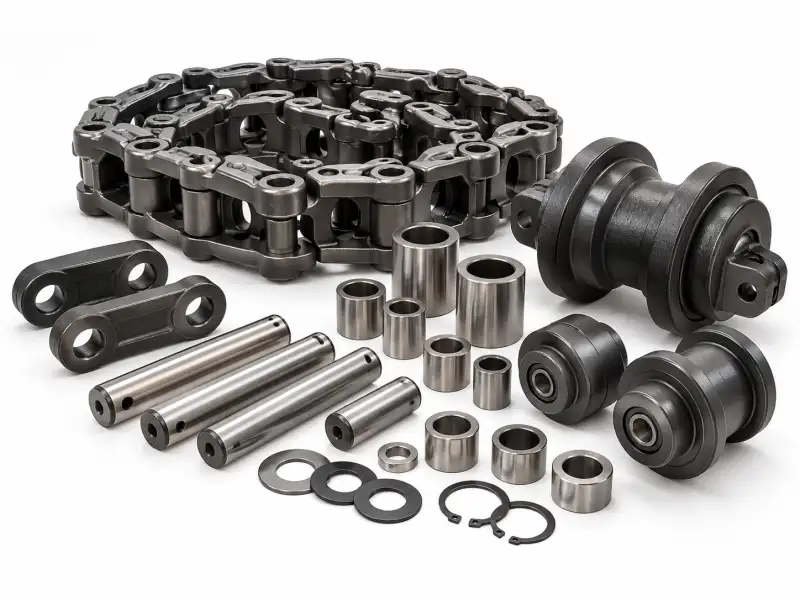
A sound replacement process starts by identifying the work the chain performs and the evidence available at the installation. The steps below are presented as a decision workflow. They do not assume that any two unmeasured components are interchangeable.
Look For Elongation
Joint wear can make an installed chain appear longer than it was when new. Compare multiple pitches and inspect how the roller position changes under tension rather than relying on sag alone.
Inspect Rollers And Pins
Look for flats, scoring, abnormal rotation marks and changes in contact width. Components may wear at different rates; evaluating the entire joint limits the chance of repeating a repair prematurely.
For this step, document the before-condition and the exact measurement or observation used to make the decision. If the part is already removed, show where it fitted by photographing adjacent components. Keep the photo identifier next to the measured value so it can be checked later.
Check Attachment Integrity
Inspect brackets, weld regions, fasteners and mounting holes for distortion, ovalization or cracks. An attachment failure can mimic a chain-tracking issue.
A supplier reviewing check attachment integrity must know whether the figure is nominal drawing data, field measurement, or an estimate from a worn component. That distinction changes what can be quoted without a sample and what needs an additional dimensional inspection.
Inspect The Sprocket Pair
Uneven engagement, noise and hooked teeth can indicate an accumulated chain/sprocket mismatch. Photograph the profile before disassembly and note whether the problem occurs in one position or through the full circuit.
For this step, document the before-condition and the exact measurement or observation used to make the decision. If the part is already removed, show where it fitted by photographing adjacent components. Keep the photo identifier next to the measured value so it can be checked later.
Use A Repair Decision Checklist
If damage is localized and surrounding parts are sound, a component-level repair may be considered. If wear is distributed, the entire strand and mating components require a more comprehensive review.
Enquiry Data Checklist
| Masukan dari pembeli | Alasan untuk mengkonfirmasi |
|---|---|
| Machine context | Actual chain function, installation position, equipment model if known |
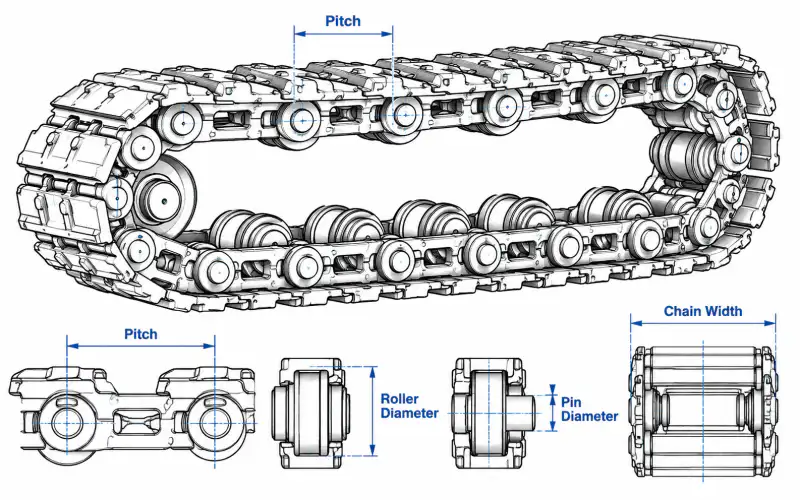
| Chain dimensions | Pitch across multiple joints, width and joint reference dimensions |
| Mounting interface | Attachment locations, hole pattern and sprocket relationship |
| Service context | Working medium, abrasion exposure and wear symptoms |
| Berkas | Measured sketch, installed photos, part reference, quantity |
Decisions That Require Verification
Manufacturing dimensions, material grade, heat treatment, permissible operating load and any substitute part reference have to be confirmed for the real ordered configuration. General chain geometry can support preliminary identification but cannot establish a guaranteed replacement by itself.
Even when a nominal chain pitch is known, examine the mating assembly. A repair that restores one joint but leaves severely worn sprocket teeth or distorted brackets unchanged may not address the underlying fault. Distinguish immediate maintenance work from a complete system replacement decision.
Technical Review Workflow
- Identify the machine function and which component is being discussed.
- Record the measured geometry with photographs and units.
- Check the mating chain, sprocket and attachment interface.
- Define the exact replacement scope and quantity.
- Submit the sketch and photos for configuration review.
Common Questions
What if the original part number is missing?
Use installed-machine views, a measured chain sample, photographs of the connecting components and a description of the duty.
Is a matching pitch enough to place an order?
No. Joint shape, width, roller geometry, mounting offset and sprocket engagement can differ at the same nominal pitch.
Can dimensions from a worn component be used?
Yes as a provisional starting point, but significant wear must be documented and compared with an unworn reference when possible.
How can a technical enquiry be reviewed efficiently?
Supply the actual application, photos with scale, readable sketch, link count, interface details and quantity.
Differentiate Wear Mechanisms
Pin joint elongation, roller surface wear, side-plate abrasion and bracket cracking are different observations and should not be collapsed into a single worn-chain label. Identify which surfaces carry sliding contact, which articulate, and which transfer mounting loads. Compare the same feature at several positions along the circuit to see whether deterioration is local or distributed. A strong wear pattern can indicate a nearby alignment or guidance issue, but failure analysis requires more information than appearance alone. Use a repeatable inspection form to keep observations separate from conclusions.
Measure Joint Clearance
Where safe and approved, compare side play and visible articulation of adjacent joints without forcing a seized connection. Mark locations that bind, rock excessively or show missing retainers. Record direct measurements if a suitable procedure and tool are available; otherwise document the observable movement and equipment position. Do not assign a universal allowable chain elongation without the actual design specification. A chain that looks acceptable while static may still exhibit poor engagement around a sprocket. Photographs from both sides help the technical reviewer understand whether the condition is symmetrical.
Inspect Surrounding Parts
Look at tooth contact, guide wear, support roller surfaces and the attachment plates that connect the chain to the working structure. A severe mark on a bracket may be a result of nearby misalignment rather than isolated bracket weakness. Record loosened fasteners, displaced spacers and damaged guards as separate safety concerns. Trace any repeatable mark to where the chain passes through the same loaded region on the machine. Replacement decisions should consider the state of both the suspect chain and its mating system before procurement.
Consider The Wet Environment
Silt, sand, moisture and chemical exposure affect how damage is observed and how quickly contact surfaces become contaminated. Clean the inspection area using an approved method before making fine dimensional observations, but record the as-found condition as well. Photograph trapped debris and note whether the machine is used in brackish water or another challenging environment. These details guide material and surface protection discussions without implying that one specific steel or treatment always solves the problem. Storage conditions may be relevant to seized joints after shutdown.
Document Repair Priorities
Record which findings require immediate operational safety review, which should be measured at the next maintenance window and which can be monitored according to the equipment maintenance plan. Safety decisions belong to qualified maintenance personnel with access to the real machine instructions. A site inspector should not use a generic online chain guide to approve continued operation of a damaged undercarriage. When requesting parts, attach the numbered photos and measurements that explain the urgency and the affected assembly scope.
Build A Repeatable Record
For later comparison, use the same camera viewpoints, joint marks and measuring locations on subsequent inspections. Store dates, machine identification, service condition and any known repair history next to the photos. If the measured pitch changes, verify that the same number of joints and same reference geometry were used. A record that separates measurements from interpretation is more useful to procurement and engineering teams than a short statement that the chain is worn out. It also helps identify whether a proposed replacement actually addresses the observed issue.
Next Step
Use the measurement guides and product-family pages together. A clear enquiry record helps the technical team identify uncertainty before a replacement decision becomes expensive.