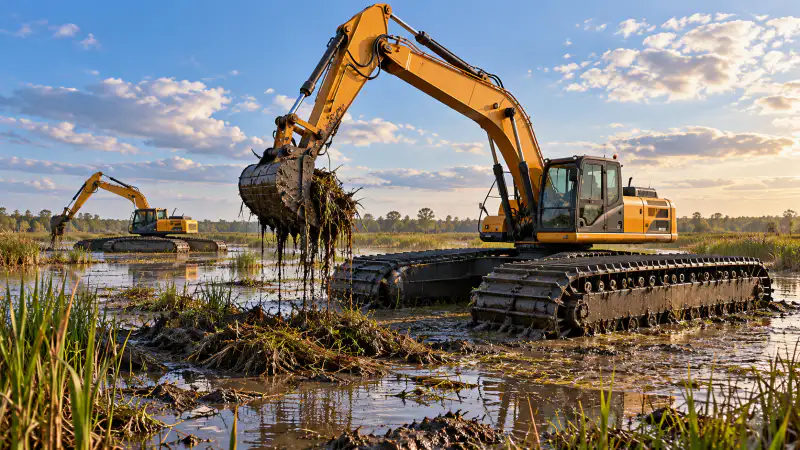
Plan inspection around sediment, moisture and difficult operating access.
یک فرآیند جایگزینی صحیح با شناسایی کاری که زنجیره انجام میدهد و شواهد موجود در محل نصب آغاز میشود. مراحل زیر به عنوان یک گردش کار تصمیمگیری ارائه شدهاند. آنها فرض نمیکنند که هیچ دو جزء اندازهگیری نشدهای قابل تعویض هستند.
Debris Accumulation
Fine sediment can pack into joints and guiding channels. Observe how the system sheds mud and whether routine cleaning access is available without creating an unsafe maintenance situation.
Water And Surface Exposure
Water chemistry varies across inland marshes, brackish environments and industrial waterways. Record the actual exposure, cleaning procedure and time submerged instead of assuming one surface treatment will suit every site.
برای این مرحله، شرایط قبل از نصب و اندازهگیری یا مشاهده دقیق مورد استفاده برای تصمیمگیری را مستند کنید. اگر قطعه قبلاً برداشته شده است، با عکس گرفتن از اجزای مجاور، محل نصب آن را نشان دهید. شناسه عکس را در کنار مقدار اندازهگیری شده نگه دارید تا بعداً بتوان آن را بررسی کرد.
Operating Under Load
Travel while carrying a heavy upper structure can produce different contact conditions from an unloaded test. Monitor the chain and sprocket under the expected travel duty where safe.
A supplier reviewing operating under load must know whether the figure is nominal drawing data, field measurement, or an estimate from a worn component. That distinction changes what can be quoted without a sample and what needs an additional dimensional inspection.
Storage And Return To Service
After extended shutdowns, inspect pinned joints for seized motion, retained sediment or surface damage. Compare the condition of both track circuits and record discrepancies.
برای این مرحله، شرایط قبل از نصب و اندازهگیری یا مشاهده دقیق مورد استفاده برای تصمیمگیری را مستند کنید. اگر قطعه قبلاً برداشته شده است، با عکس گرفتن از اجزای مجاور، محل نصب آن را نشان دهید. شناسه عکس را در کنار مقدار اندازهگیری شده نگه دارید تا بعداً بتوان آن را بررسی کرد.
When To Request Engineering Review
Persistent tracking problems, severe roller wear or newly installed replacement components justify measuring the complete mating assembly before continued operation.
چک لیست اطلاعات استعلام
| ورودی خریدار | دلیل تایید |
|---|---|
| زمینه ماشین | عملکرد واقعی زنجیره، موقعیت نصب، مدل تجهیزات در صورت مشخص بودن |
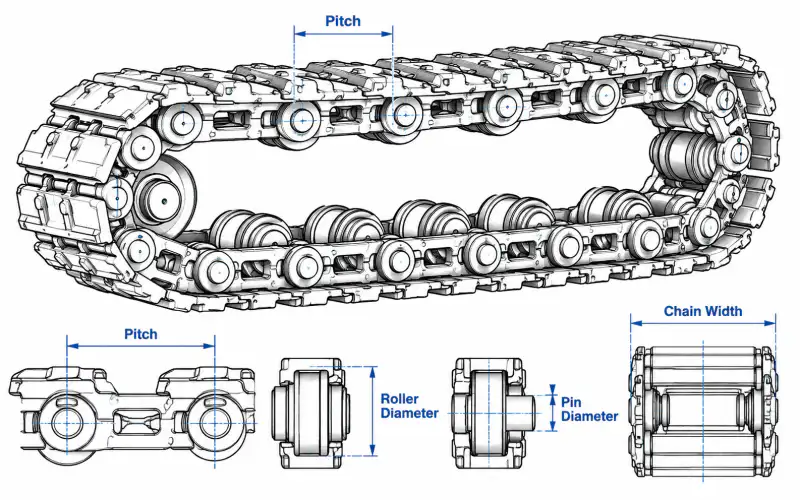
| ابعاد زنجیره ای | گام در چندین اتصال، عرض و ابعاد مرجع اتصال |
| رابط نصب | محلهای اتصال، الگوی سوراخ و رابطه چرخدندهها |
| زمینه خدمات | محیط کار، قرار گرفتن در معرض سایش و علائم سایش |
| فایلها | طرح اندازهگیری شده، عکسهای نصب شده، مرجع قطعه، تعداد |
تصمیماتی که نیاز به تأیید دارند
ابعاد تولید، درجه مواد، عملیات حرارتی، بار عملیاتی مجاز و هرگونه مرجع قطعه جایگزین باید برای پیکربندی سفارش داده شده واقعی تأیید شوند. هندسه کلی زنجیره میتواند از شناسایی اولیه پشتیبانی کند اما به خودی خود نمیتواند یک جایگزین تضمین شده را ایجاد کند.
حتی زمانی که گام اسمی زنجیر مشخص است، مجموعه جفت شونده را بررسی کنید. تعمیری که یک مفصل را بازیابی میکند اما دندانههای چرخدنده به شدت فرسوده یا براکتهای کجشده را بدون تغییر باقی میگذارد، ممکن است عیب اصلی را برطرف نکند. کار تعمیر و نگهداری فوری را از تصمیم به تعویض کامل سیستم متمایز کنید.
گردش کار بررسی فنی
- عملکرد دستگاه و اینکه کدام جزء مورد بحث است را مشخص کنید.
- هندسه اندازهگیری شده را با عکسها و واحدها ثبت کنید.
- زنجیر جفت شونده، چرخ دنده و رابط اتصال را بررسی کنید.
- محدوده و مقدار دقیق جایگزینی را تعریف کنید.
- طرح و عکسها را برای بررسی پیکربندی ارسال کنید.
سوالات متداول
اگر شماره قطعه اصلی گم شده باشد چه؟
از نماهای دستگاه نصب شده، یک نمونه زنجیر اندازهگیری شده، عکسهایی از اجزای اتصال و شرح وظایف استفاده کنید.
آیا ارائه طرح مشابه برای ثبت سفارش کافی است؟
خیر. شکل اتصال، عرض، هندسه غلتک، افست نصب و درگیری چرخدنده میتواند در یک گام اسمی یکسان متفاوت باشد.
آیا میتوان از ابعاد یک قطعه فرسوده استفاده کرد؟
بله، به عنوان یک نقطه شروع موقت، اما فرسودگی قابل توجه باید مستندسازی شود و در صورت امکان با یک مرجع فرسوده نشده مقایسه شود.
چگونه میتوان یک استعلام فنی را به طور مؤثر بررسی کرد؟
کاربرد واقعی، عکسها با مقیاس، طرح خوانا، تعداد لینکها، جزئیات رابط و تعداد را ارائه دهید.
Observe Sediment Retention
Mud and fine sand can accumulate around chain joints, tracking guides and idler regions, especially where drainage is limited. A good inspection begins with an as-found photograph, then a cleaned view of the same area after approved maintenance work. This comparison shows whether debris obscured a cracked plate, lodged near a roller or interfered with motion. Record the material type and conditions as observed; do not infer its exact abrasive properties from appearance. If sediment packs repeatedly in the same position, examine the surrounding guide geometry before focusing only on the replacement chain.
Account For Water Chemistry
Fresh water, brackish channels and industrial sediment can impose different exposure patterns. Note the location, duration of immersion, cleaning agents used and whether the machine frequently dries between operating cycles. These observations help a supplier ask the right questions about surface protection but do not justify a particular coating specification without testing or approved documentation. Inspect hidden faces and pin ends where water can remain after the visible surfaces appear dry. Field photographs should show actual conditions rather than a generic dramatic swamp scene presented as evidence.
Compare Travel Conditions
A track undercarriage can behave differently while turning, driving straight or manoeuvring over uneven submerged ground. Record when abnormal noise, binding or side loading occurs, including the machine orientation and whether one side is more affected. Do not measure clearances while the system is moving unless an approved safe procedure expressly permits it. If the track develops repeated contact marks along a guide, document the pattern with a sequence of photos and chain link marks. This helps distinguish a moving alignment issue from uniform wear across the entire circuit.
Inspect After Shutdown
Long idle periods can leave sediment deposits, surface corrosion or stiff joints that were not evident during normal travel. Before returning the machine to service, use the manufacturer-approved safe maintenance checklist to inspect both track circuits and the adjoining sprockets or guides. Identify frozen articulation, missing retainers and damaged mounting connections without assuming a universal allowable wear limit. Record each observation alongside the previous maintenance report where one exists. If the machine has been modified, update the inspection drawing so that replacement orders continue to use the current configuration.
Plan Practical Spare Parts
Spare-part planning should distinguish individual link repair kits, connecting hardware, plates and complete chain circuits. Maintenance teams benefit from documenting exactly which components can be replaced on site and which require workshop disassembly. Record parts by photographed geometry and approved identifiers; do not invent shelf model numbers to populate a stock list. If an emergency order is required, send the dimensions and interface information even when the lead time is short. A precise request can prevent receiving a visually familiar component that does not fit.
Escalate Persistent Problems
Repeated pin wear, tooth hooking, tracking problems or unusual bracket damage justify a broader assembly assessment. Compare the failed region with less affected parts and describe any change in duty, operating ground or maintenance practice. A technical guide can help structure observations but cannot certify a machine safe for operation. Escalate the decision to qualified personnel and provide the complete evidence set for replacement assessment. An integrated review of chain, support surfaces and drive components is often more useful than assuming the chain alone caused every symptom.
مرحله بعدی
از راهنماهای اندازهگیری و صفحات مربوط به خانواده محصول با هم استفاده کنید. یک سابقه استعلام واضح به تیم فنی کمک میکند تا قبل از اینکه تصمیم جایگزینی پرهزینه شود، عدم قطعیت را شناسایی کند.